

Land & Legacy
Ohio's Beginning Farmer Tax Credit: What You Need to Know
by: Brant Darnell, CPA
A state program offers help — but timing is everything
Ohio’s Beginning Farmer Tax Credit Program provides income tax benefits to both new certified farmers and the landowners who sell or rent to them. Available since the 2023 tax year, the program runs until January 1, 2028 — or until $10 million in credits have been issued, whichever comes first.
Two Credits, Two Beneficiaries
Landowners/sellers receive:
- 3.99% of the sale price or annual rental income as an Ohio income tax credit.
- Credit can be carried forward up to seven years and is nonrefundable.
Beginning farmers receive:
- A credit for the cost of an approved financial management course.
- Credit can be carried forward up to three years and nonrefundable.
Who Qualifies?
To be certified by the Ohio Department of Agriculture, a beginning farmer must:
- Be an Ohio resident and not be associated with the agricultural assets being purchased or rented.
- Have less than 10 years of experience as a farm owner or operator.
- Have a net worth under $800,000 (including spouse and dependents, adjusted for inflation).
- Provide the majority of daily labor and management for the farm.
- Have adequate farming knowledge, should show projected profit potential, and participate in an approved financial management program.
Critical: Get Certified Before Any Deal Is Done
The beginning farmer must be certified before any transfer of assets takes place. Both parties need to coordinate early — you cannot close on a purchase and apply afterward.
How to Apply
Full details and approved course listings are at agri.ohio.gov — search “Beginning Farmer Tax Credit Program.”
Bottom Line
This program is a genuine opportunity for new farmers and retiring landowners alike. It requires advance planning with tax and legal advisors can help preserve access to these limited credits.
For informational purposes only. Consult a qualified professional for advice specific to your situation.
421 Independence Drive
Napoleon OH 43545
(419) 599-8045
216 South Lynn Street
Bryan OH 43506
(419) 636-5633
157 West Main Street
Ottawa OH 45875
(419) 523-3434
Using Life Insurance to Benefit Charity
by: Erick Barone
Life insurance is often utilized in charitable giving, especially among the charitable giving arrangements of high net worth individuals and families. Methods exist where life insurance is utilized to endow a charitable foundation, a public charity, and/ or a supporting organization.
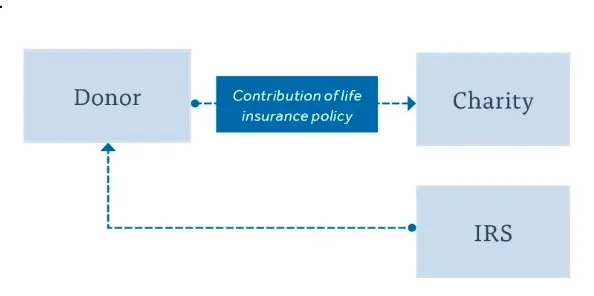
Where a donor no longer requires policy death benefit or cash value due to changed circumstances, that donor can gift an existing life Insurance policy directly to a charity.
In order to generate a charitable income tax deduction for the contribution of a policy, the donor must make a completed gift of the policy to charity. A policy gift is completed when the donor has relinquished all ownership rights (referred to as incidents of ownership) in the policy. The contribution of a policy will yield a current income tax deduction to the donor in an amount equal to the lesser of the policy’s fair market value or its basis.
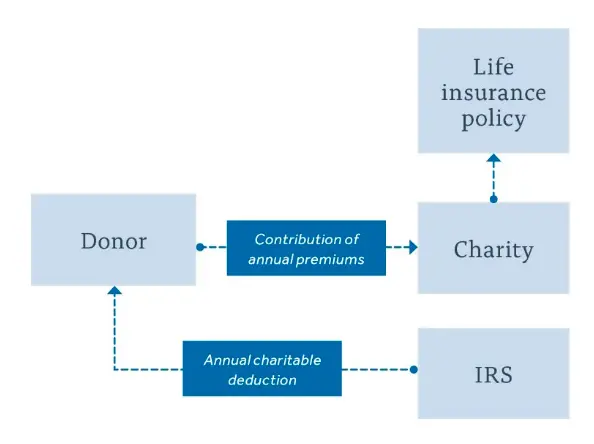
The contribution of a premium-paying policy is trickier than that of a single pay policy. The effectiveness of this technique depends on each state’s determination as to whether the charity has an insurable interest in the donor. If the donor contributed additional amounts to the charity to fund ongoing premium payments, the deduction will be limited to 60% of adjusted gross income (AGI). If the donor pays ongoing premiums directly to the insurance company the deduction is limited to 30% of AGL Any amount in excess of the deduction limits in a single year can be carried forward to offset income tax for five years.
Another gifting method involves creating a new policy for the charity. Under this method, the donor would either donate a new policy to the charity or the charity would obtain an insurance policy on the donor. The donor would fund the premium payments by making continuing cash contributions to the charity. This option may be more suitable for a younger donor since the premium cost generally would be low compared to the ultimate death benefit, and the donor retains the option to discontinue the payment of premiums, whereby the charity as owner of the policy would have the right to: (1) continue paying those premiums themselves or (2) surrender the policy for its cash value.
If the donor contributes the premium payments directly to the charity, then the charitable deduction representing those premiums is limited to 60% of the donor’s AGI for the year of the donation. If the donor pays the premiums to the insurance company, the deduction is limited to 30% of AGI for the year of the donation. Any amount in excess of the charitable deduction limits for a single year can be carried forward an additional five years to offset income in those years.
Life insurance policy valuation
To determine the appropriate deduction upon a transfer of a life insurance policy to charity, it will be necessary to determine the policy’s value. The U.S. Treasury Department has issued final regulations regarding the valuation of a life insurance policy in certain circumstances, including when it is transferred from a qualified plan to a participant, from an employer to an employee, or for taxation of permanent benefits under a group term life insurance plan. 1 The final regulations state that the value of the policy in such situations is its fair market value.
Also, the Internal Revenue Service (part of the Treasury Department) has issued Revenue Procedure 2005-25, providing two safe-harbor formulas for determining the fair market value ofa life insurance policy, retirement-income contract, endowment contract, or other contract providing life insurance protection for purposes of applying the rules oflnternal Revenue Code (IRC) §§402, 79, and 83(a). Under Rev. Proc. 2005-25 the fair market value safe harbor for a non-variable life insurance contract is the greater of ITR (interpolated terminal reserve), or PERC (premiums plus earnings minus reasonable charges) multiplied by the average surrender factor.

400 Pinner Weald Way, Suite 102
Cary, NC 27513

Erick Barone
919-234-1720
erick@legacypcs.net
https://www.legacypcs.net
CA Insurance License Number 4097153
Legal Landscape for Data Centers
by: Jeffrey M. Stopar, Esq.
Data centers have emerged as the biggest issue in rural areas throughout the Midwest. These have been debated in town halls, often in heated exchanges over money and the future of the community. It is important for landowners to understand the implications of data centers, and to seek independent legal counsel if approached for purchase or option to purchase, as each carry significant implications. What are data centers anyway? Data centers are specialized facilities housing servers and data storage. With the advent and growth of artificial intelligence (AI) in recent years, demand for the newest and largest data centers, commonly referred to as “hyperscale data centers,” (generally defined as facilities exceeding 100 megawatts of power demand and spanning hundreds of thousands ofsquare feet), has been growing and requires significant flat acreage.
The size of these hyperscale data centers has caused significant opposition based on the water and energy uses of these developments. Opponents raise environmental and noise concerns as well. Some of the opposition is based on the uncertainty that AI brings to many facets of the economy.
Based on their opposition to data centers, some Ohio voters are proposing an amendment to the Ohio Constitution that would ban all data centers with an aggregate monthly demand or peak load exceeding 25 megawatts, including hyperscale data centers. The Ohio Attorney General has certified that the title and summary of the proposed amendment are fair and truthful statements of the proposed constitutional amendment. The proponents of the proposed amendment must now obtain 413,487 signatures from Ohio voters. In addition, signatures must be obtained from at least 44 of Ohio’s 88 counties, and from each of the 44 counties, signatures must equal at least 5% of the votes cast for Governor in 2022. The proponents of the amendment have until July 1, 2026 to obtain the required signatures. (Actions like these are proposed in the form of anamendment to the Ohio Constitution because the General Assembly cannot alter the Ohio Constitution.)
The General Assembly is also considering action on data centers. Ohio House Bill 646 would create the Data Center Study Commission within the Department of Development, with members appointed by the Governor, Speaker of the House and the President of the Senate. The members of the commission would be appointed based on knowledge of certain areas, including agriculture, county government, municipalities, and water and environmental impacts of data centers. The Commission would be required to analyze the following issues raised by data centers: (1) environmental impact; (2) effect on electrical grid; (3) water usage; (4) noise pollution; (5) light pollution; (6) local economic impact; and (7) impact on farmland. The Commission’s report and findings must be submitted to the Governor and General Assembly within 6 months of the bill’s effective date. HB 646 passed the Ohio House of Representatives unanimously and is now in the Ohio Senate.
In the meantime, some municipalities and townships have passed temporary moratoriums (typically enacted by resolution and effective for a defined period) regarding new data centers, and others have strengthened their zoning regulations regarding such developments. Most potential data center sites are in rural areas that are within townships, as opposed to municipalities (cities and villages), and a township’s primary authority over data centers is its ability to enact strong zoning regulations of areas that might be the target of data center developers. Zoning rules can be written to allow data centers only if approved by the township’s board of zoning appeals (BZA), which can apply additional conditions on the approval of any potential data center. For example, a township can limit the size of the data center site, establish significant setbacks from neighboring properties and the road right-of-way, and limit the height of buildings. It is critical to note that, in order to be enforceable, these zoning regulations must be formally adopted before a developer or property owner submits an application to build a data center; regulations enacted after such an application is filed may not be applied retroactively to that application. Many rural areas are not zoned, leaving those areas subject to data center development with little or no local regulation.
Developers of data centers seek very specific criteria in selecting potential sites. They require significant flat land (at least 50 to 75 acres) and access to natural gas lines and abundant water. After finding these infrastructure components, they look to have zoning in place that would permit the facility.
If the infrastructure and zoning are in place, the developer will solicit options to purchase undeveloped farmland for data center development, often at premiums well above the market price of farm acreage – frequently in the range of $75,000 to $100,000 per acre or more. These option agreements are usually for one or two years. As the terms of the option bind the property owner to a fixed price, and the representatives and attorneys for the developers are experienced and savvy, owners of rural real property should consult with legal counsel before signing any options (which grant the developer the right to purchase the property at a set price during a defined period), letters of intent (which, depending on their terms, may create binding preliminary obligations on the owner), or contracts (which establish the full and enforceable terms of sale). Each of these instruments carries distinct legal consequences, and no such document should be executed without independent legal review.

Locations
Toledo, Ohio
7255 Crossleigh Court, Suite 104
Toledo, OH 43617
419-517-7377
Fort Myers, Florida
12858 Banyan Creek Drive, Suite 102
Fort Myers, FL 33908
239-955-3175
Fair Doesn't Always Mean Equal
by: Timothy J. Semro
When Robert “Ice Cream Bob” Braughm walked into my office, I instantly recognized him as the longtime fixture of our lakeside community — the man who’d served soft ice cream to half the town for decades. But behind his cheerful reputation was a father carrying the weight of a difficult decision. Bob owns not only the iconic ice‑cream stand but also forty acres of solid, well‑rented farmland, a property he cherishes deeply. After the passing of his wife, he came to me with a familiar worry I often hear from farm families: How do I pass along the land and everything I’ve built without causing my children to drift apart?
As we spoke, it became clear that the farmland sat at the emotional center of Bob’s dilemma. His eldest son, John, had built a pole barn on the property years before—a structure born of sweat equity and a deep connection to the land. The acreage itself is worth good money, around $10,000 an acre, but for Bob, the value runs much deeper. He told me his father’s old advice, the kind many farmers live by: “Don’t sell land — they’re not making more of it.” Protecting that farm and preventing future conflict meant more to him than any dollar amount ever could.
Then there was the ice‑cream stand—Bob’s middle child, Bob Jr., has poured fifteen years into running and expanding it. Susan, the youngest, chose a career in nursing and has built a stable life away from the family businesses. Bob felt pulled in every direction. An equal split, he feared, might force a sale of the farm or jeopardize the business his son relies on. I’ve seen this many times: parents want fairness, but they also want stability — and sometimes those goals compete.
That’s when I shared a truth that often brings both clarity and relief to families like his: fair doesn’t always mean equal. Fairness can mean honoring the child who invested years into the business, the one who built the barn, or the one who stayed close to help on the land — while still ensuring the others receive meaningful support through cash, savings, or non‑farm assets. With the right trust in place, Bob could protect the farmland from forced sales, keep the ice‑cream stand in steady hands, and prevent his children from becoming accidental business partners destined for conflict.
In the end, Bob made thoughtful, courageous choices. John would receive the barn he built. Bob Jr. would inherit the ice‑cream stand he helped transform. Susan would receive a larger share of the financial assets to balance things out. It wasn’t equal, but it was undeniably fair. Most importantly, it ensured the farm stayed intact, the business stayed operational, and the relationships Bob valued more than anything would remain strong. For any family rooted in agriculture, Bob’s story is a powerful reminder that good planning can protect both the land and the legacy.
If you would like to read the full store, please scan the QR Code below for the entire chapter in my book, “Your Money, Your Way“.

Timothy J. Semro is an OSBA Board Certified Specialist in Estate Planning, Trust, and Probate Law, licensed to practice in Ohio, Michigan, and Arizona. Tim enjoys meeting with clients, using his knowledge and experience to understand and solve complex estate planning issues. He continually strives to simplify the complicated, creating tailored solutions that are flexible enough to handle the unexpected. Outside of work, Tim enjoys spending time with family, cheering for the Michigan State Spartans, and is an avid golfer.


Locations
Toledo, Ohio
7255 Crossleigh Court, Suite 104
Toledo, OH 43617
419-517-7377
Fort Myers, Florida
12858 Banyan Creek Drive, Suite 102
Fort Myers, FL 33908
239-955-3175
Basic Estate Planning
by: Todd Palmer
Overview
Regardless of your level of wealth, the failure to establish an estate plan can be detrimental to your family. A properly structured estate plan helps ensure that your family and financial goals are addressed during your life, if incapacitated, and after your death. The following provides an introductory discussion regarding essential planning individuals should consider, as well as an overview of lifetime gifting strategies and long-term trust planning.
Essential Documents
The following planning documents should be considered regardless of whether an individual is married or single.
Last Will and Testament
A will directs how you want your assets distributed upon your death. Without a will, your property would pass as required under your state’s intestacy statutes. State law may not provide the inheritance scheme you would choose for your family and could also increase your exposure to federal estate taxes.
In addition to directing the disposition of your property, a will can enable you to:
- Name an executor, avoiding the trouble and cost of a court-appointed administrator
- Avoid bonding costs
- Avoid annual reporting/accounting to the probate court
- Name a guardian for minor children, substantially eliminating the likelihood of a court-appointed guardianship
- Protect the children’s inheritances in the event your surviving spouse should remarry
- Retain assets in trust if distributions to your heirs at your death would be inadvisable
For high-net-worth married couples, a properly structured will can help assure federal estate tax benefits are preserved for the couple’s estates. Wills should allow a married couple to take full advantage of the unlimited marital deduction and the federal estate tax exemption ($15 million per individual in 2026, as indexed for inflation) of both spouses. Allocation of the first-to-die spouse’s exemption amount to a trust may reduce estate tax for the couple’s combined estate, provide asset protection, and allow control and management by a trustee, while still benefitting the surviving spouse and children.
Regardless of whether you are single or married and have a modest or large estate, estate planning is an extremely important part of your personal planning. Tax laws pertaining to estate planning are continually changing. As such, it is wise to review your estate plan with your professional advisers regularly to make any modifications that may be relevant to you and your family.
Revocable Living Trust
A revocable living trust (RLT) is an arrangement by which a person (the grantor) transfers ownership of property into a trust during one’s lifetime. An RLT can be used as a substitute for a will in many respects by providing for the distribution of assets upon the grantor’s death. Unlike a will, a revocable living trust can be established to govern the distribution and use of the trust assets during the grantor’s lifetime, which can make it a useful planning tool in the event the grantor becomes incapacitated. In essence, the trust is like a rulebook (which can be modified or revoked by the grantor during lifetime) for how the grantor’s assets are to be handled while alive and after death.
Establishing an RLT may provide the following benefits:
- Avoidance of Probate. Probate is the legal process for transferring property upon death. Assets owned in an RLT do not pass through the probate process, potentially enabling a faster and less costly method for transferring assets upon death than by a will, which would require probate and sometimes court supervision. An RLT also can be especially useful in avoiding multiple probate proceedings when an individual owns real estate or other property in multiple states.
- Privacy Preservation. At an individual’s death, when assets are passed to the heirs through probate under a will, probate may expose details of an estate to the public through public probate court filings. In contrast, trusts allow the transfer of assets to remain private within the constraints of the trust document.
- Segregation of Assets. An RLT may be useful for married couples with substantial separate property acquired prior to the marriage. In community property states, the trust can help segregate those assets from their community property assets.
- Estate Tax Minimization. An RLT does nothing to save estate or income taxes during life, but provisions can be included in the trust, as with estate tax-efficient wills, to take advantage of estate tax exemption amounts at death.
Durable General Power of Attorney
A power of attorney is a document that allows a person (known as the “Principal”) to appoint another person or organization to handle affairs while the Principal is unavailable or unable to do so. The person or organization the Principal appoints is referred to as an “Attorney-in-Fact” or “Agent.”
A general power of attorney can grant the agent limited or broad powers as specified in the document to manage the principal’s financial affairs and property. Some of the powers that may be granted include:
- Handling banking transactions and transactions involving U.S. securities
- Entering safety deposit boxes
- Buying and selling property
- Purchasing life insurance
- Settling claims
- Entering into contracts
- Buying, managing or sellingreal estate
- Filing tax returns
- Handling matters related to government benefits
- Maintaining and operating business interests
- Making gifts and consenting to splitting gifts made by the principal’s spouse
- Making transfers to RLTs
Health Care Power of Attorney
A Health Care Power of Attorney allows the principal to designate an agent who will have the authority to make health care decisions on the principal’s behalf in the event the principal is rendered unconscious, mentally incompetent, or is otherwise unable to make such decisions.
A HIPAA (Health Insurance Portability and Accountability Act) Authorization also is advisable. It allows medical providers to release a person’s protected medical information to another person. Individuals may include the HIPAA language in the Health Care Power of Attorney, or may use a freestanding document. If your state has a HIPAA Authorization form that has been published or approved by a state regulatory agency, consider using the approved form because medical professionals in your state will be more likely to recognize the form and release the information when requested.
Living Will/Advance Directive
A living will, also known as an advance directive, is a legal document that a person uses to make known one’s wishes regarding life prolonging medical treatments. The person creating the living will (the declarant) indicates which treatments the declarant does or does not want applied in the event the declarant suffers from a terminal illness or is in a permanent vegetative state. A living will does not become effective unless the declarant is incapacitated. Until then the declarant will be able to direct one’s own treatments.
Estate Planning Strategies and Considerations
Making Lifetime Gifts
Many individuals and married couples make gifts to their children and other family members. Lifetime gifts may allow the person making the gift (the donor) to observe how the recipients (the donees) will handle the money. Accordingly, by making lifetime gifts the donor can help guide the donee on sound money and business management skills. Gifts also can help reduce a donor’s taxable estate if desirable. However, making gifts in excess of the donor’s lifetime gift tax exemption amount ($15 million in 2026) may result in the imposition of gift taxes. A gift tax is a federal tax on the transfer of property by one individual to another where the person making the gift receives nothing in return.1
Annual gifts. Each year, a donor can gift up to a specified amount ($19,000 in 2026) to each of an unlimited number of donees without triggering federal gift taxes by using what is commonly referred to as the “gift tax annual exclusion.” The annual exclusion amount is indexed for inflation, but only adjusted in increments. Through “gift splitting,” married couples can use their combined annual exclusions for a given donee even if only one spouse actually transfers property to that donee.
Only gifts of a “present interest” are eligible for the annual exclusion. Gifts of a “future interest” are ineligible. If a recipient receives a gift with no strings attached, the gift is of a present interest. If there are conditions on the gift, or if there is a delay in the enjoyment of the gift, the gift is a future interest gift. A gift to a trust is a gift of a present interest only if:
- the beneficiary has the present right to trust income,
- the beneficiary has a right to withdraw the amount of the gift from the trust and is given timely written notice of such right; or
- the trust is for the exclusive benefit of a minor and meets certain requirements.
Applicable Exclusion Amount. Every U.S. citizen is permitted a “unified credit” that allows the individual to transfer a certain amount of assets free of federal transfer taxes during life or at death. If a donor makes gifts to a donee during any given taxable year that exceed the annual exclusion amount, the donor can reduce any potential gift tax by applying all or a portion of his or her unified credit. At death, the executor of the decedent’s estate will reduce the amount of estate tax due by any unified credit not used during the decedent’s life. The amount of assets the credit effectively exempts is referred to as the “applicable exclusion amount.” The applicable exclusion amount for gift and estate tax purposes is $15 million for individuals and $30 million for married couples in 2026. The entire amount can be gifted during life, if desired.
Medical and Educational Gifts. Direct payment by an individual to a provider of qualified educational or medical expenses for the benefit of another individual does not constitute a taxable gift. The definition of educational expenses only includes tuition paid directly to the educational institution, not room and board, books, etc. As for medical expenses, IRS regulations describe exactly what types of expenses will be treated as qualified medical expenses.
Outright Gifts and Bequests vs. Long-Term Trusts
Rather than making an outright gift (during life) or bequest (upon death), many individuals choose to place assets in long term trusts for the donee’s benefit. Assets held in trust are distributed according to the trust terms. As long as the trust remains in effect, assets can generally be protected from creditors, litigation and divorce, as well as from mismanagement by the recipient. If incorporated into the terms of the trust, distributions can be structured to either encourage or discourage certain behavior. For example, the grantor of a trust could provide that distributions be made upon a beneficiary graduating from college or after holding a job for a certain number of years. A grantor also could require distributions be withheld in the event of a beneficiary’s impending bankruptcy or for proven or suspected use of an abusive substance.
If desired, a beneficiary of a trust can serve as a trustee (or co-trustee) of that trust. However, if a beneficiary/trustee will be granted powers to make discretionary distributions of trust assets to oneself, such powers should be limited to an ascertainable standard—more specifically for their health, education, maintenance and support. This can help to keep the trust’s assets out of the beneficiary’s taxable estate. From an asset protection standpoint, a trustee/beneficiary with rights to make discretionary distributions to one’s self may expose the beneficiary’s rights to claims of creditors. In contrast, if rights are granted to an independent third party trustee to make discretionary distributions to the trust beneficiaries, trust assets may be more effectively protected from the claims of the beneficiaries’ creditors. Moreover, unlike a trustee/beneficiary, an independent trustee can be granted unlimited discretion to distribute assets to a beneficiary without causing the trust’s assets to be includible in the beneficiary’s taxable estate.


Todd Palmer, ChFC®
Registered Representative offering securities through NYLIFE Securities LLC (member FINRA/SIPC)
(919) 357-1440
Todd Palmer is Co-Owner of Farmland News and a licensed financial professional specializing in legacy and estate planning for farm families.
Planning for Farmers and Ranchers
by: Erick Barone
While farmers and ranchers confront the same problems as any business owner regarding succession planning, wealth preservation, and estate taxes, they also face many unique issues. Specific tax rules, regulations, and the nature of their industry requires a specialized focus and expertise when planning for such clients.
Farming and ranching operators may also have particularly strong convictions regarding long-established family enterprises that are heavily concentrated in real property. Many farms and ranches have been in the family for several generations, and a prevalent desire is to keep ownership of the land in the hands of family members: both those involved in operations as well as those who may not be involved. Of course, this generally gives rise to unique problems governing appropriate income apportionment, control, and estate equalization.
As a result, a comprehensive understanding of the relevant issues and techniques is crucial to the effective implementation of appropriate legal and tax strategies, ensuring the preservation of the farm or ranch for succeeding generations while bestowing long-term peace of mind on operators.
Challenges
Farm and ranching operations are especially vulnerable to poor economic conditions. Capital requirements are high and return on investment is sometimes low. Operators typically accumulate most of their equity through earnings and gradual increases in asset values from growth and inflation; net worth tends to result more from growth in the value of production assets rather than income accumulation. It is also critical for operators to maintain a debt-equity structure which assures survival through periods of adverse weather and market conditions.
Likewise, agriculture also is extremely sensitive to export markets. For example, high interest rates in the 1980s contributed
to a strong dollar, which in turn contributed to a drop in U.S. farm exports. Farmers and ranchers were ultimately hurt by the
decline in the price of agricultural products and real estate. Operators with excessive debt combined with high interest rates
and low prices often did not survive during the era. For today’s farmers and ranchers to survive, maintaining financial solvency
is important. For a family enterprise to thrive for generations, establishing and maintaining an effective long-term plan is
essential.
Details of the industry
Attitudes and outlooks
Many successful family farms and ranches are built over generations, creating a deep personal bond and sense of identity in the operation. Furthermore, the physical nature of the labor that goes into building a farm often creates a unique perspective by the operator, one that may place a strong emphasis on the character, stability, and integrity that farming or ranching signifies. The fruits of the many years oflabor include self-respect, personal satisfaction and a tangible, permanent family legacy.
Nature of work
Farming and ranching operations have become more complex in recent years. Farm output and income are strongly influenced by the weather, disease, fluctuations in prices of domestic farm products, and federal farm programs.
Both farmers and ranchers operate machinery and maintain equipment and facilities, and both track technological improvements in animal breeding and seeds and choose new or existing products. Farming and ranching can be hazardous work. Tractors and other machinery can cause serious injury, and operators must be constantly alert on the job. The proper operation of equipment and handling of chemicals are necessary to avoid accidents, safeguard health, and protect the environment.
Operators of small farms and ranches usually perform all tasks, physical and administrative. They keep records for management and tax purposes, service machinery, maintain buildings, and grow vegetables and raise animals. By contrast, operators oflarge farms and ranches have employees who help with the physical work. Farmers on crop farms usually work from sunrise to sunset during the planting and harvesting seasons. The rest of the year, they plan next season’s crops, market their output, and repair machinery.
On livestock-producing farms and ranches, work goes on throughout the year. Animals, unless they are grazing, must be fed and watered every day, and dairy cows must be milked two or three times a day. Many livestock and dairy farmers monitor and attend to the health of their herds, which may include assisting in the birthing of animals.
Tailored planning
Since each family farm or ranch is unique, no single approach to estate and business planning works for everyone. It is important to understand that the farm or ranch involves the interaction of people in the strong bonds of family, who are engaged in the business and who make decisions affecting the business.
It also is important that estate and succession planning adopt a long-term planning horizon and implement planning strategies in a timely and efficient manner to accomplish intended goals. Most farmers and ranchers desire that the operation continue when they are gone, though a few do not. When the operation will not be continued, the focus shifts to transferring, liquidating, and distributing equity to the heirs while minimizing any loss in value.
Potential planning issues and concerns
Since operating a farm or ranch is difficult, designing a strategy for the ultimate transition of the business upon the primary operator’s demise can be confusing. There are a variety of issues and concerns related to estate and business planning that should be addressed, the most common of which are discussed below.
Farm economics
Farm economics differ from that of most other businesses. An acre offarmland might cost $5,000 but have a rental value of only $200 per year, a 4% return. Compare this with residential and commercial real estate which typically have returns in the range of8%-10%. This means that the current productivity offarmland is relatively low, and much of its value lies in the possibility of future appreciation. It also means that farming is extraordinarily capital-intensive. For example, a dairy operation typically requires about one acre offarmland to support one cow. Therefore, a typical 200-head dairy operation requires 200 acres ofland with a value of approximately $2,000,000. This of course doesn’t include the cost of the cows or a modern computerized milking parlor (which can cost $1,000,000).
Govemment programs
Farm and ranch subsidies have a significant influence on agricultural production in the global and local economy. Farm subsidy supporters argue that subsidizing agricultural products helps ensure farmers have a constant stable income, and that certain vital commodities will always be available through domestic production, ensuring U.S. independence, security and economic health.
The Agriculture Improvement Act of 2018 (2018 Farm Bill) was originally set to expire on December 31, 2023, although it has been extended in one year increments multiple times, most recently on November 12, 2025, extending it through September 30, 2026. While the legislation permanently authorized crop insurance regardless of subsequent expiration, farmers may reasonably believe that subsidy programs will be less prevalent in the future due to federal fiscal constraints and the use of farm bills to advance non-farm spending.
Note that the type of organization established (LLC, partnership, or corporation), amount offarmland under management, and number of owners within the organization can all impact eligibility for agricultural subsidies. As a result, the creation and modification of estate and business plans should always be cognizant of the extent to which eligibility for certain programs may be affected.
Lack of liquidity and diversification
Due to the unique nature off arming and ranching, operators tend to put all income and profits back into the operation in the form of illiquid assets such as farmland and equipment. At an operator’s death or at the transition of the operation, problems can be caused due to a lack of assets easily convertible into cash.
Operating loans
Operating loans may be used to purchase items needed for a successful farm operation. These items include livestock, farm equipment, feed, seed, fuel, farm chemicals, repairs, insurance, and other operating expenses. Loans for annual operating expenses (seasonal loans) are normally repaid within one year. Loans for equipment and livestock purchases are scheduled for repayment over longer periods. Some loans are obtained through private credit and some through government programs.
These loans can be substantial based upon the time of year. Yearly operating loan balances can be very high in the spring and completely paid off by December. This can cause a problem depending on the time of year operators become disabled or die. The loss of the key operator can be devastating at any time and especially during the time that an operating loan exists. The need to recognize the loss of an operator in the succession plan is crucial.
Depreciation recapture
Certain farm related property can be depreciated. Property subject to depreciation that is subsequently sold or exchanged can be subject to recapture. When real property in a farm or ranch is sold at a gain and accelerated depreciation has been claimed, the owner may be required to pay tax at ordinary rates to the extent of the excess accelerated depreciation.
Succession planning for active and non-active children
One of the most sensitive issues for parents within the operation is balancing the interests of the children who work in the operation against the interests of the non-participating children. More so than in most businesses, children establish their “right” to the farm or ranch through sweat equity. Working on the farm or ranch is not for everyone; some children would rather pursue other career opportunities. When there are active children involved in the operation, farm and ranch operators will sometimes gift or assist an active child to acquire their own ownership interest in a portion of the land, livestock, or equipment. It is rare, however, for a non-active child to acquire an ownership interest in these assets since current operators realize that non-active ownership can sometimes stifle farming operations. This is especially a problem in the typical situation in which the farm or ranch is the only significant asset in the family. Will the non-active children feel slighted, or will they feel lucky that they are free from the rigors of farming/ranching life? If the farm or ranch represents the family heritage, how can a non-active child feel a part of that heritage?
Resolution of this question is fundamental to the continuation of the operation but is limited by the basic economics of farming. The following factors must be weighed:
- Existing assets and cash flow available for both funding the legacy in the operation and providing for the non-active heirs;
- Dedication and ability of the successor;
- Parents’ viewpoint regarding contribution equity of the successor and proportion of operation that should be attributed to the successor as a result;
- Desire by non-active heirs for continuity of the operation or preference for liquidation of their share;
- Ability and willingness of successor(s) and non-active heirs to work together in harmony; and
- Parents’ viewpoint on continuity of the operation versus equality of inheritances for the heirs.
An additional matter to consider is the feasibility and reasonable opportunity given to non-active heirs to become active. Did these children have a chance to work in the family enterprise, or was that chance thwarted or at least hindered by the fact that an older sibling was provided the opportunity, and once accepted, foreclosed that opportunity to other heirs?
Retirement for the senior generation
Any plan to pass the farm or ranch to the next generation should allow for a secure retirement for the senior generation. Frequently operators don’t have sufficient cash flow during their working years to accumulate liquid savings or otherwise save enough on a tax-deferred basis for retirement. Similarly, it is not usually possible to put in place a non-qualified deferred compensation plan when the junior generation is taking over, since there is not sufficient dependable cash flow when multiple families are reliant on the income from the operation.
Special tax preference planning
The family farm and ranch has long had a special place in the American imagination and a special place in the tax code. Three important tax preferences can facilitate keeping the operation in the family: conservation easements, special use valuation, and alternative valuation date.
Conservation easements
Farm and ranch land is frequently subject to development pressure which can dramatically increase the fair market value of the land and corresponding property taxes. Placing a conservation easement on the land permanently restricts the use of the land for agricultural purposes. This will reduce the current value of the land and associated real estate taxes and reduce future appreciation.
Special use valuation
The purpose of Internal Revenue Code §2032A (Section 2032A) is to allow farmland to be valued as farmland. Section 2032A permits farmland to be valued at its productive value in farming, rather than farmland’s fair market value (if sold for its highest and best use). When valuing farmland at a lower cost, a significant amount of estate tax can be saved. In select situations, it is the difference between a farm remaining in the family or being sold to raise the cash necessary to pay estate taxes.
Special land use Section 2032A is generally misunderstood. It is widely perceived as easy, uncomplicated, and the primary method of solving farm estate planning problems. Unfortunately, that perception often is based on a lack of accurate information concerning the complexities of how Section 2032A works, and of its true advantages and disadvantages.
First, it is critical that the decedent have materially participated in the farm or closely held business to use special-use valuation. The law also requires that property inherited by special-use valuation be used for a qualified purpose by a qualifying heir for a minimum of 10 years. A qualified use means:
- The property is used as a farm for farming purposes; or
- The property is used in a trade or business other than farming.
The term trade or business applies only to an active business such as manufacturing, mercantile or service enterprise, or to the raising of agricultural or horticultural commodities.
If such tests regarding the material participation and qualified use of a qualified family member are not maintained, additional estate tax and penalties may apply.
Alternative valuation date
The purpose of alternate valuation is to reduce the tax liability if the total value of the estate’s property has decreased since the date of the decedent’s death. Alternative valuation applies to all the property in the estate. It cannot be used for only part of the property, as is the case with special-use valuation. However, the personal representative may choose alternate valuation and use special-use valuation also for qualified real property. The choice must be made on the first estate tax return filed for the estate.
Liquidity, taxes, and estate administration
An overriding concern for preservation of the farm operation upon the death of the senior operator is protection from fragmentation (forced sale) through the following:
- Excessive estate taxes;
- Excessive debt service cost;
- Operational competence of the legatee; or
- Division of the estate among family members.
Asset liquidity within the estate or liquidity that can be created at death may be a necessary component of the plan.
Many wills and living trusts contain tax formulas that may create unanticipated and unwanted results, especially in situations where the estate is not subject to estate tax. As the law continuously changes, operators need to review the impact of the new law upon their existing documents.
400 Pinner Weald Way, Suite 102
Cary, NC 27513
Erick Barone
919-234-1720
erick@legacypcs.net
https://www.legacypcs.net
CA Insurance License Number 4097153